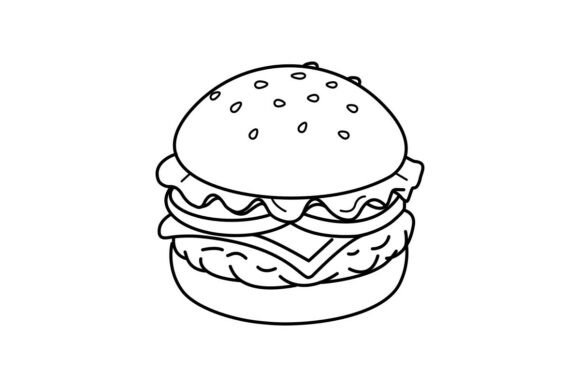
Burger Coloring Book Vector Illustration: Graphics & Illustrations for Real Publishing
As a blog designer and digital publisher who’s shipped over 200 editorial redesigns and built visual systems for food bloggers, lifestyle educators, and small business brands, I opened Burger Coloring Book Vector Illustration expecting charm—and found something far more valuable: editorial utility. This isn’t just a playful doodle. It’s a purpose-built graphic design asset—clean, scalable, and intentionally uncluttered—with bold outlines and balanced negative space that invites interaction without demanding expertise.
A First Impression That Builds Reader Trust
The moment it renders on screen, Burger Coloring Book Vector Illustration sets an unmistakable tone: warm, approachable, and quietly confident. It leans into playful authenticity—not childish whimsy, but the kind of grounded joy you’d see in a well-curated food newsletter or a mindful cooking blog. Think “Saturday morning kitchen experiment,” not “fast-food ad.” It reads as lifestyle-focused and educational at once—ideal for content around healthy eating habits, kid-friendly cooking, nutrition literacy, or even food-themed mindfulness exercises. The simplicity isn’t minimalism for minimalism’s sake; it’s clarity engineered for comprehension. Readers instantly recognize the subject, feel invited to engage (color it, share it, adapt it), and subconsciously associate your page with accessibility and care.
Where This Graphic Design Asset Earns Its Keep
In real publishing workflows, Burger Coloring Book Vector Illustration shines where visual clarity meets audience intent:
- Blog featured images—especially for listicles like “10 Fun Ways to Teach Kids About Balanced Meals” or “Printable Food-Themed Activities for Homeschoolers”
- Pinterest pins that stop scrollers: pair it with bold typography and a soft background for high CTR
- Digital guides and lead magnets, where it anchors worksheets, meal-planning trackers, or coloring-based learning modules
- Newsletter headers that reinforce brand warmth without sacrificing polish
- Category thumbnails on recipe hubs or wellness blogs—creating instant visual recognition across dozens of posts
- Canva templates for educators and coaches building branded social media graphics or printable design kits
- Social media graphics for Instagram carousels or Facebook community posts centered on food literacy or family engagement
It strengthens visual hierarchy by giving text room to breathe. It boosts click-through potential because its friendly familiarity stands out amid overly saturated stock imagery. And crucially—it reinforces brand identity without requiring custom illustration budgets. For affiliate marketing pages reviewing kitchen tools or healthy snack boxes, it adds editorial weight while keeping focus on value—not decoration.
Where It Fits Best (and Where to Pause)
This vector illustration performs strongest in contexts where warmth, interactivity, and clarity are strategic goals. Use it confidently in:
- Hero images for food-adjacent editorial content (e.g., “How to Talk to Kids About Nutrition”)
- Article thumbnails on category pages—especially for blogs targeting parents, teachers, or wellness newcomers
- Pinterest pins sized 1000×1500px or larger
- Downloadable printables and digital products sold via Gumroad or Payhip
- Newsletter banners embedded in MailerLite or ConvertKit campaigns
- Social media previews where contrast and recognizability matter most
Use with intention—not assumption—in these cases:
- Small mobile thumbnails (<50px height) where outline detail may blur
- Text-dense blog graphics where fine lines compete with body copy
- Backgrounds with low contrast (e.g., light gray on off-white) that mute its bold outlines
- Busy layouts with multiple competing visual elements—let it anchor, don’t crowd it
- Serious professional niches (e.g., clinical nutrition research, corporate wellness reports) where tonal alignment matters more than visual appeal
Publisher Notes You’ll Actually Use
Before dropping Burger Coloring Book Vector Illustration into production, run these quick checks:
- Preview it inside your actual blog layout—not just in isolation—to assess spacing and rhythm
- Test how it looks beside headline text in your CMS: try it with serif (e.g., Merriweather), sans serif (e.g., Inter), script (e.g., Pacifico), and display fonts (e.g., Poppins Bold)
- Check contrast on both desktop and mobile—especially if overlaying text
- Convert to grayscale to verify shape integrity (critical for printing or accessibility)
- Verify file size: SVG is ideal for web use; if delivered as EPS or AI, export clean SVG or optimized PNG (under 120KB)
- Confirm commercial license terms—especially for monetized sites, affiliate marketing pages, or paid digital downloads
This isn’t just another creative marketplace find. It’s a lightweight, high-leverage design asset that supports content marketing goals without asking for design overhead. For online educators building digital guides, small business owners launching printable design bundles, or affiliate marketers needing trustworthy, on-brand social media graphics, Burger Coloring Book Vector Illustration delivers consistent quality—no art director required.
Final Thought: Design That Serves the Story
In editorial design, the best graphics don’t shout—they support. They make complex ideas feel inviting, turn abstract concepts into tangible moments, and help readers feel seen before they’ve read a word. Burger Coloring Book Vector Illustration does exactly that: it’s a quiet piece of modern design with serious publishing horsepower. Whether you’re building a website header, designing a Canva template for teachers, or crafting a lead magnet for a nutrition coaching practice, this illustration doesn’t distract—it deepens. And in today’s attention economy, that’s not just nice to have. It’s essential.