Dog Mandala Coloring Page Line Art
A Designer’s First Glance: Calm, Clear, and Craft-Ready
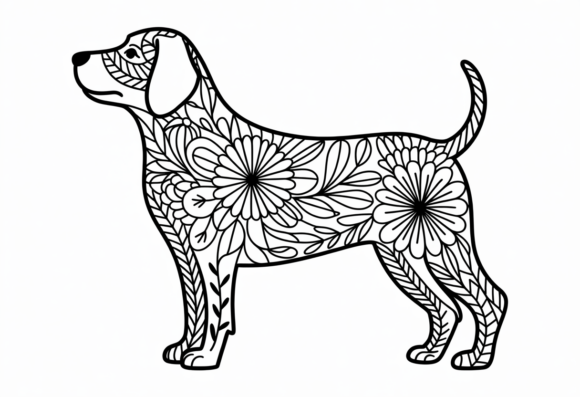
When I opened Dog Mandala Coloring Page Line Art, my first thought wasn’t “cute dog” — it was “breathable design.” The linework is clean, balanced, and intentionally open. There’s no visual clutter, no forced symmetry that fights the natural flow of a canine profile. Instead, it feels like a mindful pause — circular rhythm meets gentle anatomy. That matters deeply when translating line art into embroidery. A mandala-inspired layout gives structure to stitch placement, while the dog motif adds warmth and approachability. It’s not overly detailed like a photorealistic portrait, nor is it so minimal it loses character. For craft business owners and Etsy sellers, this sits perfectly between “artistic” and “accessible” — ideal for handmade products that need emotional resonance without technical overreach.
Where This Design Truly Shines in Real Embroidery Projects
I tested Dog Mandala Coloring Page Line Art as the centerpiece for a custom embroidered tote bag — cotton canvas, medium-weight stabilizer, black thread on natural linen. The result? Crisp, confident, and quietly sophisticated. It worked just as well on a soft organic cotton baby onesie (with tear-away + cutaway stabilizer combo) and as a small patch sewn onto a denim apron. The line weight holds up beautifully in satin stitch outlines and translates cleanly into running stitch borders or subtle fill-stitch mandala rings. As a sweatshirt embroidery design, it reads clearly even at 3.5" wide — no detail vanishes in knit texture. And because the composition is centered and self-contained, it scales gracefully across pillow covers, tea towels, and holiday gift tags without distortion.
For small shop owners and creative entrepreneurs, this isn’t just a graphic — it’s a versatile design asset. It fits naturally into boutique branding (think nursery decor bundles or pet-lover subscription boxes), works as a printable mockup base for digital product previews, and supports consistent visual language across physical and digital offerings. Customers respond well to its quiet confidence: it feels handmade, intentional, and gift-ready — not mass-produced or algorithmically generated.
Where to Proceed with Care
Like any strong line art, Dog Mandala Coloring Page Line Art demands thoughtful execution — especially on challenging substrates. On stretchy fabric (like ribbed knit tees), tighten your hoop tension and use a light cutaway stabilizer to prevent puckering around the outer mandala curves. On dark fabric, avoid ultra-thin lines in running stitch — they’ll disappear. Test contrast first: try black thread on navy twill versus white thread on charcoal fleece. You’ll notice how the design’s openness helps — fewer dense fill areas mean less risk of stiffness or bulk.
Small hoop sizes (under 4") require trimming inner details before digitizing — the fine loops near the dog’s ear or paw may collapse if forced into tight spaces. And on curved surfaces like caps, prioritize the central dog silhouette over outer mandala flourishes; those delicate outer rings can distort unless carefully repositioned in your embroidery software. Also, avoid layering this design directly over seams or bulky pockets — the clean lines lose authority where fabric folds or shifts.
Practical Notes Every Embroidery Designer Should Keep Handy
- Always test on scrap fabric first — especially with textured weaves or blends. What looks sharp on screen may soften in stitch.
- Review stitch density before finalizing. This design leans toward lower-density outlines, but if you add fill elements, check for thread build-up in tight corners.
- Confirm hoop size compatibility — the original file offers flexibility, but your machine’s max hoop area dictates safe scaling.
- Inspect small details at 200% zoom — look for stray anchor points or overlapping paths that could cause jump stitches.
- Test in black-and-white mockups — this reveals clarity issues invisible in color previews.
- Compare performance on light vs. dark backgrounds — adjust underlay or thread choice accordingly.
- Use proper stabilizer — medium-weight cutaway for stable fabrics, lightweight tear-away for baby items.
- Verify licensing — since this is a digital embroidery file sold across Crafts and Graphics categories, confirm commercial use rights before selling finished embroidered products or reselling digitized versions.
Why This Design Builds Trust — Not Just Stitches
In my work with clients and small craft businesses, I’ve watched how one well-chosen design elevates perception. Dog Mandala Coloring Page Line Art doesn’t shout — it invites. That makes it powerful for personalized gifts and boutique merchandise. When a customer sees this on a hand-embroidered kitchen towel or baby blanket, they sense care in the curation, not just the stitching. It signals brand consistency: thoughtful, calm, human-made. No frantic energy, no visual noise — just clarity and warmth. That builds trust faster than any tagline.
For Etsy sellers, it’s a quiet differentiator. Among hundreds of dog-themed listings, this stands out by leaning into mindfulness rather than cuteness overload. It appeals to buyers who value intentionality — yoga studio merch, holistic pet shops, modern nurseries. And because it’s delivered in multiple formats (SVG, EPS, PNG, PDF, AI), it supports both embroidery digitizing and print-on-demand workflows — a real win for hybrid craft businesses.
Final Thought: A Design That Serves the Maker First
Dog Mandala Coloring Page Line Art succeeds because it respects the maker’s time and intent. It’s not trying to be everything — it’s a focused, adaptable, and emotionally grounded embroidery file. Whether you’re stitching a single custom apron or building a full collection of pet-themed handmade products, it gives you room to breathe, space to interpret, and structure to execute cleanly. In an industry flooded with overdesigned graphics, that kind of restraint is rare — and valuable.