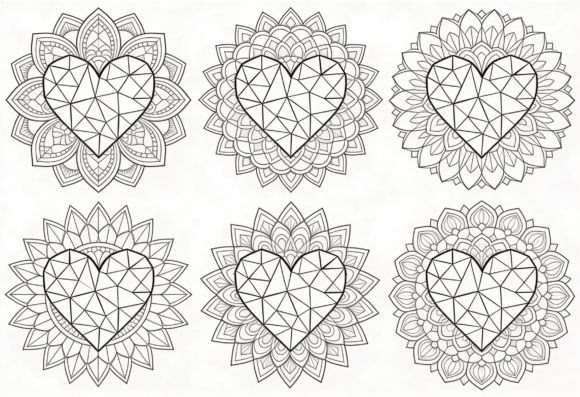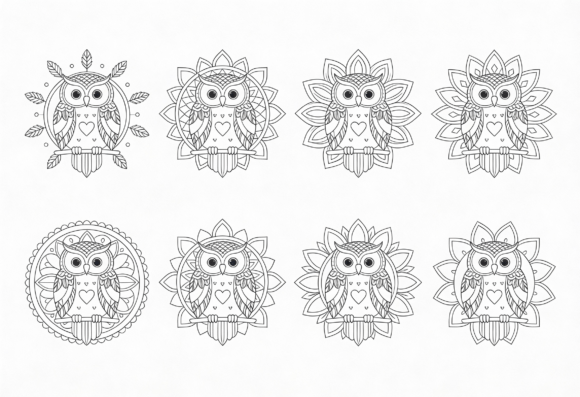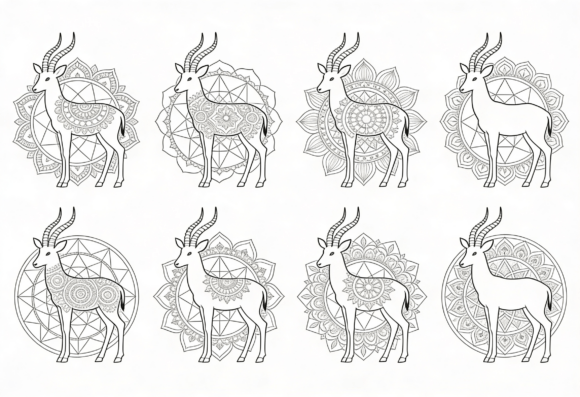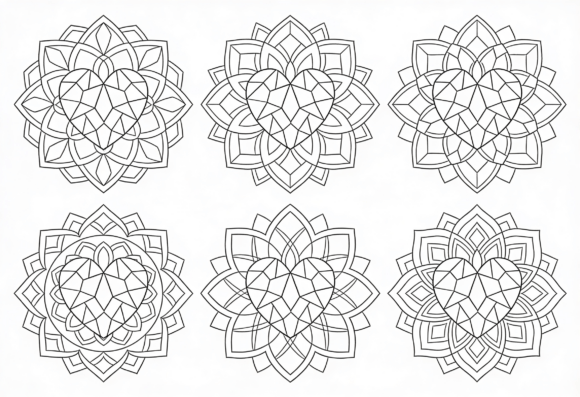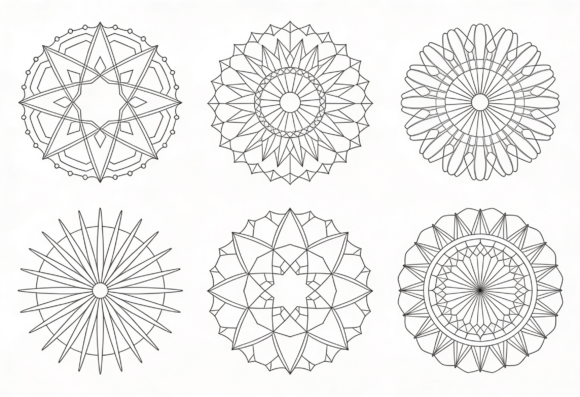
Geometric Mandala Coloring Pages Bundle
A Designer’s First Look: Clean, Calm, and Craft-Ready
Opening the Geometric Mandala Coloring Pages Bundle, I felt that familiar quiet excitement—the kind that comes when a design lands with intention. Not flashy, not fussy, but balanced. The lines are crisp, the symmetry intentional, and the negative space generous. It reads as both meditative and modern—ideal for makers who value clarity over clutter. As an embroidery designer who regularly translates flat graphics into stitched texture, my first instinct wasn’t “pretty”—it was “workable.” This bundle doesn’t shout. It invites slow stitching, thoughtful placement, and confident scaling.
Where It Lives Best in Real Embroidery Projects
I tested one of the mandalas on a natural linen tote bag—medium-weight, slightly textured, no stretch. Hooped with medium-cutaway stabilizer, stitched at 75% size (approx. 4.2” diameter), it held beautifully. The radial geometry translated cleanly: concentric circles stayed round, intersecting lines remained sharp, and the outer border elements didn’t blur or collapse. That tells me this isn’t just a coloring page—it’s a disciplined vector foundation.
It shines strongest on items where calm sophistication matters: baby onesies (soft cotton, gentle contrast thread), kitchen tea towels (linen or cotton canvas), pillow covers for minimalist nurseries, and unisex sweatshirts in heather grey or oatmeal. I also used a simplified version as a custom embroidered patch for a boutique apron line—clean edges meant crisp satin-stitched borders and zero fraying in the wash.
For Etsy sellers and small shop owners, this bundle offers quiet versatility. It fits seamlessly into curated collections—think “Mindful Makes,” “Modern Nursery,” or “Slow Stitch Studio.” Customers recognize the care in the geometry; it feels handmade even before it’s stitched.
Where to Proceed With Care
- Small hoop sizes: Some mandalas include fine inner rings or tight interlocking shapes. Below 3”, detail may compress—test stitch density and consider simplifying inner layers manually.
- Textured or loosely woven fabrics: On burlap or heavy slub linen, very thin connecting lines (under 0.8mm visual weight) can disappear in the weave. Opt for bolder variants or add subtle underlay.
- Stretchy fabric: Not ideal for t-shirts without significant stabilization. Use tear-away + cutaway combo and reduce stitch speed.
- Dark or dense backgrounds: The design relies on line integrity—not heavy fill. On black fabric, avoid light thread unless you want delicate contrast. Test white, charcoal, or deep navy threads side-by-side.
- Curved surfaces (caps, curved pillow fronts): Avoid placing intricate center motifs directly over seams or crowns. Prioritize outer ring elements—they adapt better to contour.
What It Adds to Your Finished Product—Beyond Aesthetics
This isn’t just about how it looks—it’s about how it *feels* to the person holding it. A customer receiving a personalized baby blanket with one of these mandalas stitched in ivory thread notices the precision. There’s trust in that consistency. No wobbly lines. No muddy intersections. That builds perceived value—especially for premium handmade products or boutique gifting.
For craft businesses, the Geometric Mandala Coloring Pages Bundle supports brand cohesion. Use the same motif across embroidery, printable mockups, and digital product previews—it scales cleanly from 2” patches to 8” wall hangings. That uniformity strengthens recognition without needing logos or text.
And for holiday or wedding gifts? Its neutrality is a strength. It reads as personal without being prescriptive—no dates, names, or seasonal clichés. Just presence. Just craft.
Practical Notes Every Embroidery Designer Should Check
- Always test the Geometric Mandala Coloring Pages Bundle on scrap fabric matching your final project’s weight and stretch.
- Review stitch density—especially in layered rings. Overly dense fills can cause puckering on lightweight cottons.
- Confirm hoop size compatibility before digitizing. Some mandalas span 5–6”, others sit comfortably in a 4” hoop.
- Inspect tiny corners and junction points at 200% zoom. Vector clarity doesn’t guarantee stitch clarity—some nodes may need smoothing for smoother satin stitch flow.
- Run black-and-white mockups. Does the design retain hierarchy without color? It should.
- Compare performance on light vs. dark fabric backgrounds using real thread swatches—not just screen previews.
- Use appropriate stabilizer: cutaway for knits, tear-away for stable wovens, fusible for lightweight silks or rayons.
- Verify licensing terms before selling finished embroidered items or bundling the files digitally. This bundle is listed as a Graphics asset in the Crafts category—confirm commercial use rights directly with the seller if reselling stitched goods or digital derivatives.
Final Thought: A Quiet Workhorse, Not a Flashy Trend
The Geometric Mandala Coloring Pages Bundle won’t dominate your Instagram feed with neon gradients or viral hooks—and that’s its power. It’s the kind of design that earns repeat use: on a client’s custom apron order, a batch of nursery pillows for your Etsy shop, or a limited-run holiday tote series. It stitches cleanly, photographs honestly, and holds up across fabric types and customer expectations. For embroidery designers and creative entrepreneurs who build long-term value over short-term buzz, this is less of a “design download” and more of a reliable tool—one you’ll reach for again, not just once.