Paper Bag Outline SVG, Coloring Page
A Clean, Quiet Shape with Real Embroidery Potential
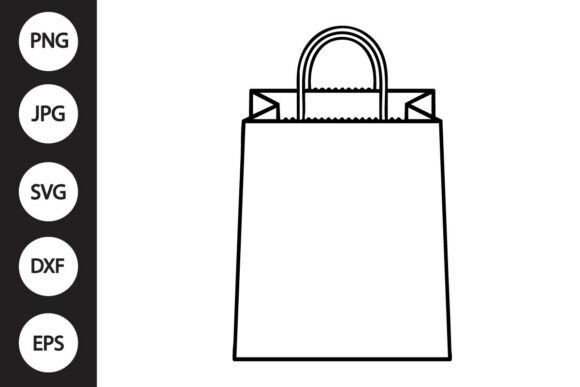
First impression? This isn’t a fussy, over-rendered illustration—it’s a confident, open-outline drawing of a classic paper bag: simple handles, soft fold lines, and just enough structure to read instantly. As someone who’s stitched hundreds of designs for Etsy sellers, boutique merchandise, and custom baby gifts, I appreciate how much breathing room this outline gives the needle. It feels like a sketch you’d find in a well-loved craft journal—not overly polished, but full of quiet charm. That simplicity is its strength: it leans into handmade authenticity rather than competing with busy patterns or photorealism.
Where It Shines (and Where It Needs Thought)
I recently tested Paper Bag Outline SVG, Coloring Page as the central motif on a set of linen tea towels for a local kitchen goods shop. We embroidered it in a single-color satin stitch, medium density—no fill, no applique—and the result was clean, legible, and quietly sophisticated. Customers responded immediately: “It looks like something I’d draw myself,” one said. That’s the sweet spot. This design thrives on natural-fiber fabrics—cotton canvas, medium-weight linen, unbleached muslin—where its line weight holds up without getting lost in texture. It works beautifully on tote bags, aprons, pillow covers, and even minimalist baby onesies when sized down thoughtfully.
But here’s what I watched closely: on stretchy fabric like lightweight French terry (think sweatshirts), the outline blurred slightly at the curve of the bag’s base unless we added a light tear-away + cutaway stabilizer combo. On dark fabric, contrast mattered more than expected—even a subtle shift from navy to charcoal thread changed how clearly the shape read at arm’s length. And on curved surfaces like structured caps? The top handle loop compressed visually; we resized it slightly taller to preserve balance. These aren’t flaws—they’re reminders that Paper Bag Outline SVG, Coloring Page is a design asset, not a plug-and-play stamp. It rewards attention to context.
What It Adds to Your Finished Product
This outline doesn’t shout. It invites. That makes it unusually effective for personalized gifts—like monogrammed paper bag outlines holding a child’s name inside, stitched onto a cotton drawstring bag. For small shop owners, it builds brand consistency without rigidity: pair it with a hand-lettered tagline in your shop’s font, and it becomes part of your visual language. For Etsy sellers, it’s a low-risk, high-recognition motif—shoppers scrolling past recognize the shape instantly, which boosts click-through on listings. And because it’s inherently scalable and uncluttered, it photographs well across digital platforms: clean mockups, flat lays, even Instagram reels showing the stitching process.
That said, it won’t carry heavy branding alone. If you’re building a full embroidery collection, treat this as a foundational element—not the headline. Use it alongside complementary motifs (a single sprig, a tiny coffee cup, a handwritten date) to add narrative without clutter. Its value lies in restraint: it leaves space for the fabric, the thread, and the maker’s hand to speak.
Practical Notes from the Hoop
- Test first: Always run a sample on scrap fabric matching your final substrate—especially if using textured weaves or blends.
- Stabilizer matters: Medium-weight cutaway works best for apparel; tear-away suffices for stable home décor fabrics.
- Thread color is part of the design: A soft oatmeal thread on natural canvas reads warm and tactile; black on white reads crisp and modern. Avoid muddy mid-tones unless intentional.
- Hoop size check: The outline scales well, but avoid pushing below ~2.5" wide on delicate baby items—fine corners can lose definition.
- Mock it in grayscale: Before digitizing, preview the design in black and white against both light and dark backgrounds. Does the shape hold up? Does the negative space feel intentional?
- Licensing clarity: Since this is a digital embroidery file listed under Crafts and Graphics, confirm whether commercial use is permitted before selling finished embroidered products or bundling it into your own digital product offerings.
Not Just for Cutting Machines—A Design That Translates
Yes, the listing says “Cut files for Cricut, Silhouette”—but don’t let that limit how you see Paper Bag Outline SVG, Coloring Page. As an embroidery designer, I converted it into a clean machine embroidery design with minimal anchor points and consistent line weight. No jagged vectors, no unnecessary nodes—just smooth curves that translate cleanly to satin and running stitch. That adaptability makes it valuable across mediums: print-on-demand mockups, hand-drawn coloring pages for kids’ activity kits, even subtle watermark-style branding on packaging. Its dual nature—as both a cutting template and a stitch-ready outline—means it fits naturally into multiple creative workflows.
Final Thought: Less Is Legible
In a market flooded with intricate, high-density embroidery files, there’s real power in choosing a design that doesn’t try to do everything. Paper Bag Outline SVG, Coloring Page earns trust because it’s honest: it’s a shape, not a statement. It works for holiday embroidery (think gift tags on handmade ornaments), baby embroidery (gentle, non-gendered, easy to personalize), and commercial embroidery projects where clarity trumps complexity. If your goal is a finished product that feels intentional, unhurried, and human-made—this outline is a thoughtful, versatile starting point. Just remember: the most compelling handmade product isn’t the one with the most stitches. It’s the one where every line has purpose—and this one does.