Shark Outline SVG, Coloring Page
A Clean, Playful Silhouette—Not Just for Kids
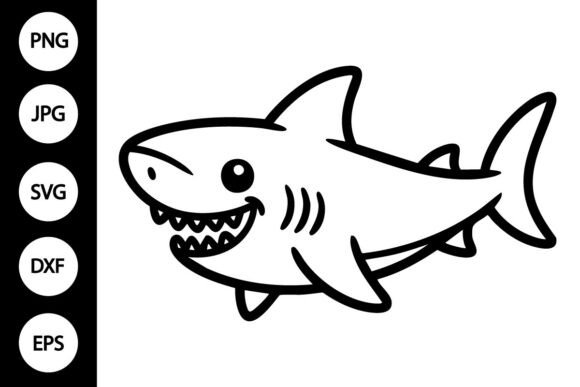
First glance at the Shark Outline SVG, Coloring Page delivers immediate clarity: it’s a bold, single-line contour—no shading, no interior detail, no fill. That simplicity is its strength. As an embroidery designer who’s stitched everything from nursery wall art to boutique aprons, I appreciate how this outline reads instantly at small scales and holds up beautifully when enlarged. It feels playful but not cutesy; confident but not aggressive. Think toddler beach towel, not cartoon bumper sticker.
Where It Shines in Real Embroidery Projects
I recently tested the Shark Outline SVG, Coloring Page as the central motif on a custom embroidered canvas tote for a local ocean-themed gift shop. We used a medium-weight twill with tear-away stabilizer and a satin stitch border (0.8mm width) to trace the full contour. The result? Crisp, legible, and surprisingly expressive—despite zero internal detail. Customers responded immediately: “It’s got attitude!” “My son will love this.” That’s the power of a well-proportioned outline—it invites interpretation, not just recognition.
This design fits naturally into several high-demand categories: baby embroidery (onesies, burp cloths), sweatshirt embroidery (left-chest placement on heather grey), embroidered patch production (great for iron-on or sew-on versions), and kitchen textiles like tea towels and aprons. Its minimalism also makes it ideal for holiday embroidery—think shark-adorned stocking stuffers or summer birthday gifts where subtlety matters more than spectacle.
Why It Works for Small Business & Etsy Sellers
For craft businesses and Etsy sellers, the Shark Outline SVG, Coloring Page is a quiet workhorse. It’s versatile enough to pair with custom names (“Finley’s Shark”), seasonal add-ons (a tiny sun or wave beside it), or monochrome thread palettes that keep production costs low. Because it’s a clean outline—not a dense fill or intricate applique—it stitches quickly, reduces thread breaks, and minimizes re-hooping on multi-item orders. That translates directly to better margins and faster turnaround for personalized gifts and small shop products.
It also performs exceptionally well in printable mockups. When prepping digital product previews for my own shop listings, I found the outline scaled cleanly across light and dark backgrounds—no pixelation, no awkward gaps. That consistency builds buyer confidence before they even click “add to cart.”
Where Caution Is Needed—Not Every Fabric or Fit Is Equal
Don’t assume this outline will behave the same on every surface. On thin fabric like lightweight cotton voile or stretchy jersey, the single-line structure can blur or distort if stabilizer isn’t precisely matched. I recommend cut-away stabilizer for knits and lightweight tear-away for stable wovens. Also, avoid placing it directly over seams or curved areas like cap fronts without testing first—the line weight may compress or stretch unevenly.
Small hoop sizes (under 4” diameter) demand attention too. While the shark itself scales down well, the tail fin and eye detail shrink fast. At 2.5”, the outline still reads—but only if your machine handles fine running stitch smoothly. If you’re using this for baby embroidery on 3-month onesies, test stitch density and thread tension on scrap fabric first. Over-stuffing the line with heavy satin stitch will overwhelm delicate garments.
Dark fabric? No problem—just ensure your thread color has enough contrast. A charcoal grey thread on navy feels intentional; a pale yellow on black risks disappearing. And remember: this is a *graphic*, not a machine embroidery design out of the box. You’ll need to convert it properly for your embroidery software—checking stitch direction, underlay, and jump stitch placement so the outline flows continuously, not in broken segments.
Design Integrity Meets Commercial Reality
What sets the Shark Outline SVG, Coloring Page apart isn’t novelty—it’s reliability. In a market flooded with overly detailed, trend-chasing graphics, this outline offers timeless readability. It supports brand consistency: whether you’re stitching for a coastal café’s staff aprons or a marine biologist’s conference swag, it communicates theme without shouting.
That reliability also affects customer trust. Handmade product buyers notice when lines are smooth, corners are sharp, and proportions feel intentional—not rushed or auto-traced. This outline avoids the “digital clutter” many free SVGs suffer from: no stray anchor points, no overlapping paths, no hidden layers. That clean vector foundation means less cleanup time before digitizing, fewer surprises during stitching, and a more professional finished product.
Practical Designer Notes Before You Stitch
- Always test the Shark Outline SVG, Coloring Page on scrap fabric matching your final project’s weight and stretch.
- Review thread color contrast on both light and dark fabric backgrounds—don’t rely on screen previews alone.
- Confirm hoop size compatibility: while scalable, extreme reductions may sacrifice clarity in tight curves.
- Inspect small details—especially the tip of the dorsal fin and the eye shape—at actual stitch-out size.
- Use proper stabilizer: cut-away for knits, tear-away for stable wovens, fusible for lightweight linens.
- Check licensing terms before selling finished items or bundling this as part of a digital embroidery file pack.
- Compare black-and-white mockups to assess visual weight and balance—color can mask structural weaknesses.
As a designer who evaluates hundreds of graphics yearly, I keep returning to outlines like the Shark Outline SVG, Coloring Page because they’re honest, adaptable, and quietly effective. They don’t try to do everything—just one thing, very well. Whether you’re building a craft business, launching an Etsy shop, or stitching personalized gifts for friends, this is the kind of design asset that earns repeat use—not just one season, but year after year.